
Featured services





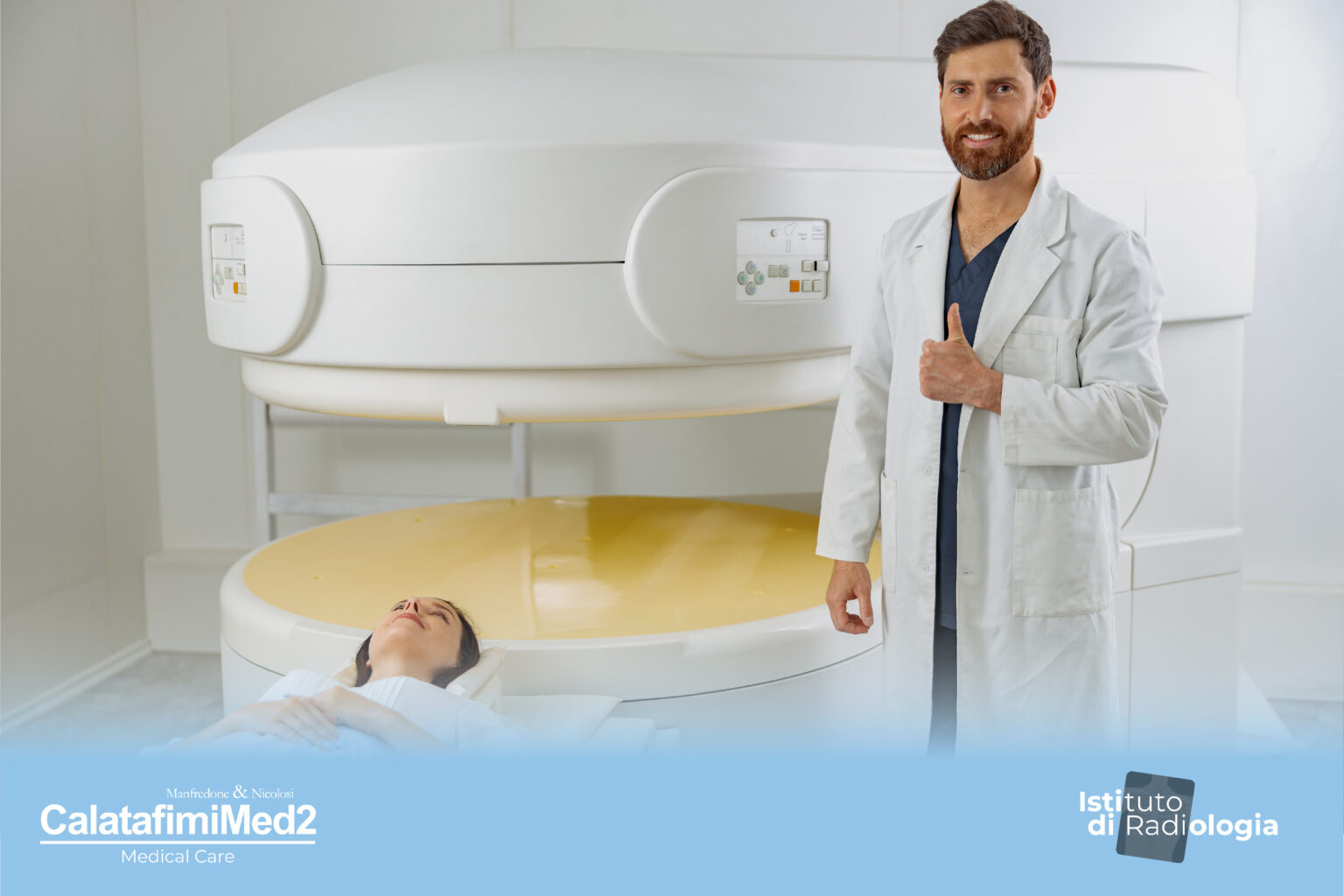
Open MRI of the joints
Open MRI of the joints is an advanced diagnostic technique that produces detailed images of the joints without using ionising radiation. It is a safe, non-invasive examination, ideal for studying joint structures, soft tissues and any condition that may affect how they work.
What does it involve?
Unlike a traditional MRI scan, where the patient lies inside a narrow, closed tunnel, an open MRI uses a wider, more comfortable scanner.
The patient lies down or sits in a more natural position, without the feeling of being enclosed that a conventional MRI gives: this greatly reduces anxiety and claustrophobia and makes the examination suitable for children, older people and those with mobility problems.
The images are extremely detailed and allow an accurate assessment of:
-
joint cartilage,
-
tendons and ligaments,
-
menisci,
-
muscles,
-
synovial membranes.
Why is it useful?
An MRI scan of the joints is a key diagnostic tool because it detects, early and accurately, conditions that are often invisible to other imaging tests such as X-rays or ultrasound.
It is particularly useful for:
-
Injuries and sports injuries: muscle tears, cruciate ligament injuries, meniscal tears, sprains, tendinitis;
-
Degenerative conditions: osteoarthritis, cartilage degeneration, progressive joint wear;
-
Inflammatory diseases: rheumatoid arthritis, synovitis, bursitis;
-
Chronic or persistent pain: when the cause is unclear and further investigation is needed;
-
Post-operative follow-up: to check the outcome of orthopaedic surgery and monitor healing.
Thanks to its accuracy, an open MRI of the joints allows the doctor to make a precise diagnosis, assess how severe the injury is and plan the most suitable treatment (rehabilitation, physiotherapy, medication or surgery).
Which joints can be examined?
An open MRI of the joints can examine all the main joints:
-
Knee: to assess menisci, cruciate and collateral ligaments, cartilage and kneecap;
-
Hip: to diagnose femoroacetabular impingement, osteoarthritis and cartilage damage;
-
Elbow: useful in cases of tennis elbow, tendon injuries and persistent pain;
-
Wrist and hand: for carpal tunnel syndrome, tendinitis, ligament injuries and repetitive strain;
-
Ankle and foot: for sprains, ligament and tendon injuries, plantar fasciitis.
Advantages of open MRI
-
Patient comfort: ideal for people with claustrophobia, children and older patients.
-
Easier access: more comfortable positions, including for people with reduced mobility.
-
No radiation: unlike CT scans or X-rays, it does not use X-rays.
-
Detailed, safe images: for a precise and timely diagnosis.
-
Monitoring over time: useful for regular checks with no risk to health.
Preparing for the test
In most cases an open MRI of the joints does not require any particular preparation. We recommend wearing comfortable clothing without metal parts.
Before the examination, please tell us about any implanted metal devices (pacemaker, prostheses, vascular clips, etc.) so that we can check they are MRI compatible.
With open MRI of the joints, CalatafimiMed offers patients a modern, safe and comfortable diagnostic technology that combines clinical accuracy with attention to the person’s wellbeing.
Services
Digital X-ray
Open MRI
Our team

Dott.ssa Silvia Messina

Dott. Vincenzo Verde
Dott. Raffaello Sutera
Dott. Giorgio Di Nino
Dott. Mario Pace
Inviaci la tua richiesta
*Waiting times refer to working days and to the first available specialist.
CalatafimiMed is in Palermo and is open from Monday to Saturday. For any further information you can contact the centre here.
Where
Radiology and diagnostic imaging area: CalatafimiMed 2 – Viale Regione Siciliana N.O. 279, Palermo. The centre is confirmed when you book.
Booking
Phone 091 59 01 50 · WhatsApp · Book online
Reports
Report delivered within 24 hours, to collect at the centre or download from Referti Web.
Frequently asked questions about Open MRI
How is an open MRI different from a traditional one?
It uses a wider scanner, without the narrow closed tunnel of a conventional MRI: the patient stays in a more natural position and feels far less anxious. That makes it suitable for children, older people and anyone who is claustrophobic or has mobility problems.
Which joints can be examined?
All the main joints: knee (menisci, cruciate and collateral ligaments, cartilage, kneecap), hip, elbow, wrist and hand, ankle and foot, as well as tendons, muscles and synovial membranes.
Is any preparation needed?
Usually not. We recommend wearing comfortable clothing with no metal parts and telling us before the scan about any implanted devices (pacemaker, prostheses, vascular clips) so that we can check they are compatible.
Does an MRI scan use radiation?
No. It uses magnetic fields and radio waves, with no X-rays or ionising radiation: it is a safe examination, suitable for regular checks over time as well.
When do I get the report?
The open MRI report is delivered within 24 hours and is also available online through the Referti Web service.
Do I need a doctor’s referral?
Yes. Tests that use X-rays require a referral from a doctor (your GP or a specialist, private practice included) stating the examination and the clinical question. Please also bring any previous tests for comparison.