
Featured services





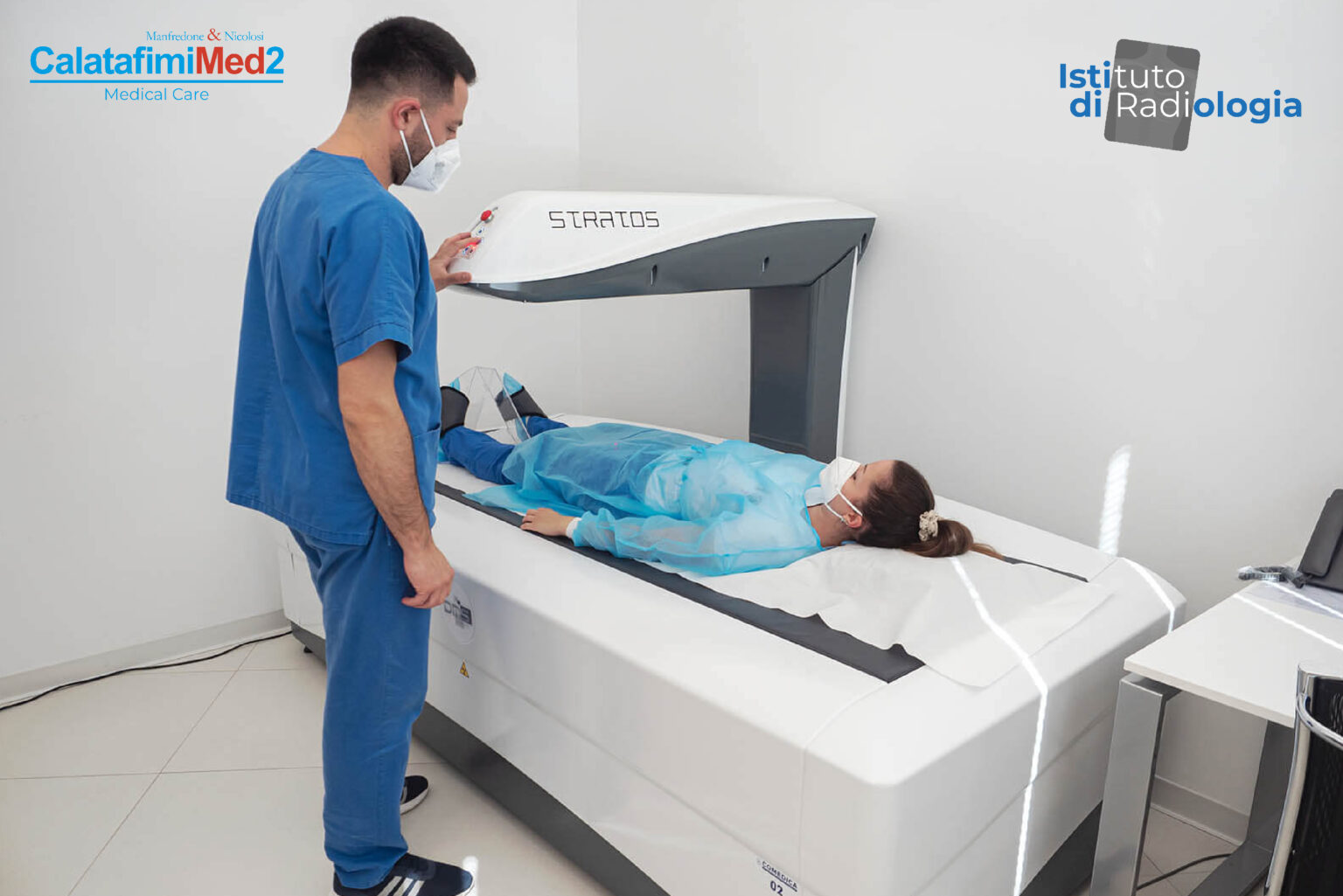
Bone densitometry (DXA)
Bone densitometry, also known as DXA – dual-energy X-ray absorptiometry, is a quick, painless and non-invasive test that measures the amount of calcium and minerals in the bones.
It is the most accurate way to assess bone density and to diagnose conditions such as osteoporosis at an early stage, a disease that weakens the bones and makes them fragile and prone to fractures.
What is it and how does it work?
Bone densitometry uses very low dose X-ray technology, which is completely safe and well tolerated. The equipment sends a beam through the bone area to be examined and software processes the images, giving numerical values that are compared with reference ranges.
The areas most commonly examined are:
-
The lumbar spine – to detect loss of bone density early.
-
The femur – to estimate the risk of fracture in older people.
Why is it useful?
Bone densitometry is an essential tool to:
-
diagnose osteoporosis and osteopenia (a milder loss of bone mass);
-
estimate the risk of fracture from the values measured;
-
monitor how bone density changes over time;
-
assess how effective drug treatments for osteoporosis are;
-
prevent complications linked to ageing and to nutritional deficiencies.
When is it recommended?
Bone densitometry is an essential tool to:
-
diagnose osteoporosis and osteopenia (a milder loss of bone mass);
-
estimate the risk of fracture from the values measured;
-
monitor how bone density changes over time;
-
assess how effective drug treatments for osteoporosis are;
-
prevent complications linked to ageing and to nutritional deficiencies.
Preparing for the test
Bone densitometry requires no particular preparation. You only need to avoid taking calcium supplements in the 24 hours before the test. Please also tell us about any recent imaging tests with contrast medium.
With bone densitometry (DXA), CalatafimiMed offers a safe and effective diagnostic technology, essential for the prevention and treatment of osteoporosis, with accurate examinations and prompt reports for the health of your bones.
Services
Our team

Dott.ssa Silvia Messina

Dott. Vincenzo Verde
Dott. Raffaello Sutera
Dott. Giorgio Di Nino

Dott. Mario Pace
Inviaci la tua richiesta
*Waiting times refer to working days and to the first available specialist.
CalatafimiMed is in Palermo and is open from Monday to Saturday. For any further information you can contact the centre here.
Where
Radiology and diagnostic imaging area: CalatafimiMed 2 – Viale Regione Siciliana N.O. 279, Palermo. The centre is confirmed when you book.
Booking
Phone 091 59 01 50 · WhatsApp · Book online
Reports
Report available at the centre or to download from Referti Web.
Frequently asked questions about Bone Densitometry (DXA)
What is a DXA scan and what is it for?
Bone densitometry (DXA) measures the amount of calcium and minerals in the bones. It is used to diagnose osteoporosis and osteopenia early, to estimate the risk of fracture and to monitor how effective treatment is over time.
Which parts of the body are examined?
The areas most commonly examined are the lumbar spine, to detect loss of bone density early, and the femur, to estimate the risk of fracture in older people.
How do I prepare for the scan?
No particular preparation is needed: simply avoid calcium supplements in the 24 hours before the scan and tell us about any recent imaging test with contrast medium.
Is the scan painful or risky?
No. It is quick, painless and non-invasive: it uses a very low dose of X-rays, which is well tolerated and safe.
Who is a DXA scan recommended for?
In particular for women during and after the menopause, for anyone with a family history or risk factors for osteoporosis, for those on treatments that can reduce bone density and for anyone who wants to monitor their bone health as a preventive measure.
Do I need a doctor’s referral?
Yes. Tests that use X-rays require a referral from a doctor (your GP or a specialist, private practice included) stating the examination and the clinical question. Please also bring any previous tests for comparison.