
Thyroid health: the importance of thyroid hormones
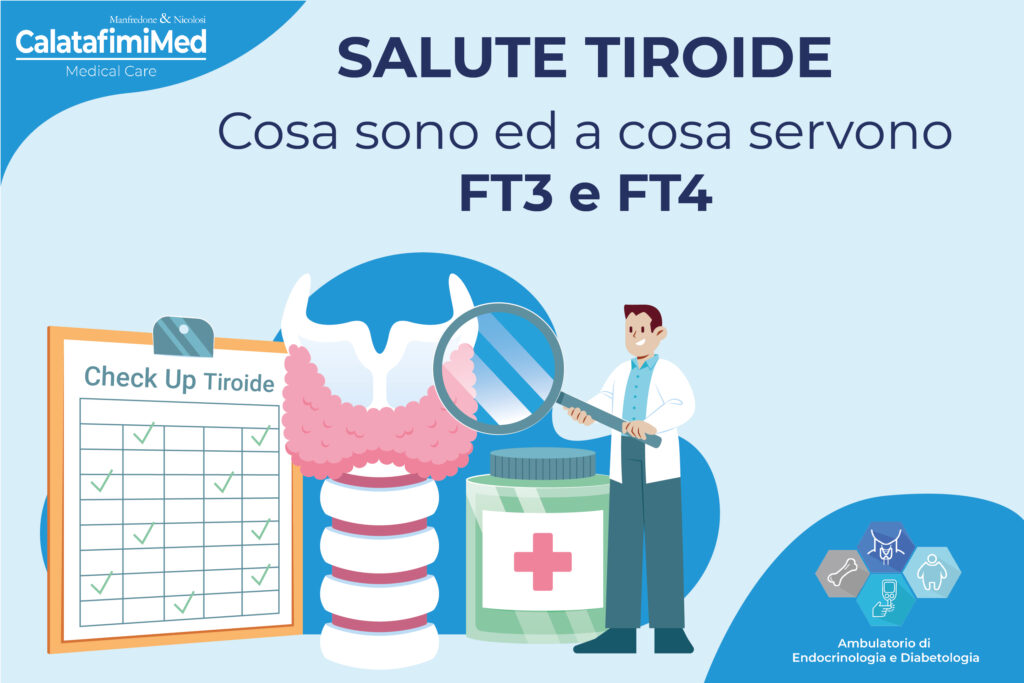
Thyroid hormones and their role in metabolism: why it is important to check FT3 and FT4
The thyroid is a small gland at the base of the neck, but its role in maintaining general wellbeing is huge. It regulates metabolism, energy and body temperature and influences many vital functions.
Changes in the production of thyroid hormones can cause a wide range of problems, which are often hard to recognise in the early stages.
As Dr Roberta Amodei, specialist at the CalatafimiMed Endocrinology and Diabetology clinic, explains,
“a regular check of thyroid function is essential to detect any hormonal imbalance early and treat it with the right approach”.
What are thyroid hormones?
The thyroid gland produces two main hormones: triiodothyronine (T3) and thyroxine (T4).
In the blood most of these hormones are bound to proteins, but only a small part — the free forms, called FT3 (free T3) and FT4 (free T4) — is biologically active and able to act directly on the tissues.
These hormones influence metabolism in every cell of the body: they regulate oxygen consumption, energy production and even protein synthesis.
The main functions of FT3 and FT4
Thyroid hormones are involved in many processes essential for health, including:
-
Development of the brain and nervous system, especially during growth;
-
Regulation of energy metabolism and calorie consumption, affecting weight and vitality;
-
Control of heart rate and body temperature;
-
Stimulation of muscle contraction and neuromuscular tone;
-
Influence on bowel movements, regulating digestion times;
-
Tissue regeneration, in particular of the skin and bones.
As Dr Amodei points out, even small imbalances in the concentration of these hormones can cause very different symptoms from person to person, which is why an accurate specialist assessment is important.
When FT3 and FT4 are abnormal
Producing too much or too little thyroid hormone can lead to two main conditions:
-
Hypothyroidism, when the thyroid works too slowly. Symptoms include chronic tiredness, weight gain, dry skin, feeling cold and a slower heartbeat.
-
Hyperthyroidism, when the gland is overactive. In this case you may notice unexplained weight loss, anxiety, tremors, excessive sweating, a fast heartbeat or insomnia.
The most common thyroid disorders
FT3 and FT4 levels can change for several reasons. The most common conditions include:
-
Hashimoto’s thyroiditis, an autoimmune disease that gradually leads to hypothyroidism;
-
Graves’ disease, a common cause of hyperthyroidism;
-
Goitre (enlarged thyroid), which may or may not be associated with hormonal problems;
-
Inflammatory thyroiditis of viral or autoimmune origin.
External factors such as prolonged stress, iodine deficiency, pregnancy or certain medicines can also affect thyroid function.
Diagnosis and monitoring
At the CalatafimiMed Endocrinology and Diabetology clinic, the thyroid is assessed through:
-
A specialist endocrinology visit, with a medical history and assessment of symptoms;
-
Blood tests to measure FT3, FT4 and TSH (the hormone that stimulates the thyroid);
-
Thyroid ultrasound, useful to assess the structure of the gland and the presence of nodules or inflammation;
-
When needed, further diagnostic tests to define the cause of the problem precisely.
“An early diagnosis — Dr Amodei stresses — allows targeted, personalised treatment, clearly improving the patient’s quality of life.”
Conclusion
Thyroid health is closely linked to the general wellbeing of the body.
Monitoring FT3 and FT4 regularly and seeing a specialist if you have suspicious symptoms is the first step to preventing complications and regaining balance.
At CalatafimiMed, Dr Roberta Amodei and her team pay great attention to the diagnosis and treatment of thyroid disorders, supporting every patient with a personalised, multidisciplinary approach.
Send us your request
*Waiting times refer to working days and to the first available specialist.
CalatafimiMed is in Palermo and is open from Monday to Saturday. For any further information you can contact the centre here.
