
All visits
 Cardiology
 Cardiology
Urology
 Urology
Ophthalmology
 Ophthalmology
Endocrinology
 Endocrinology
Pulmonology
 Pulmonology
Neuroradiology
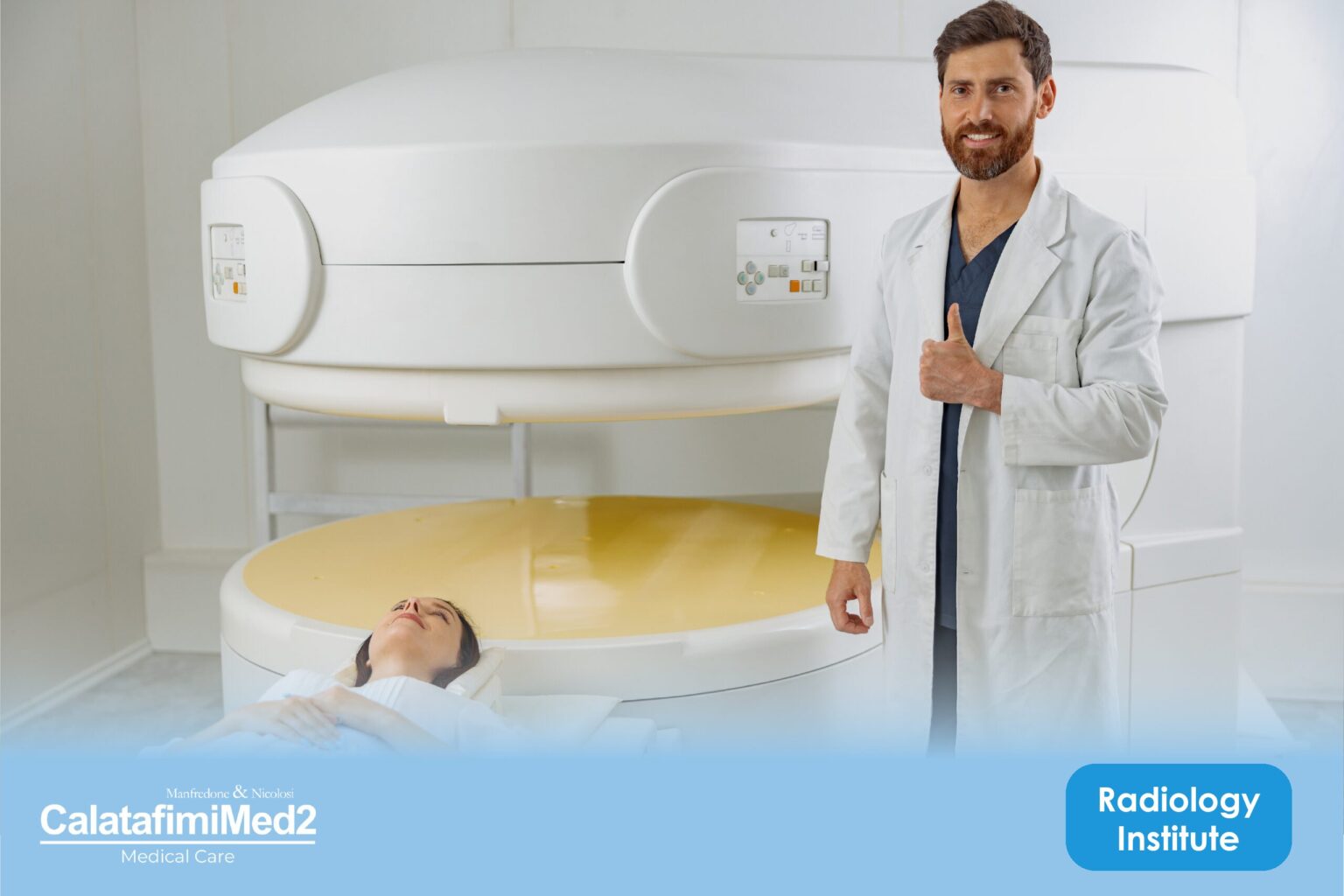
Neuroradiology is the branch of radiology dedicated to the central nervous system, that is the brain and spinal cord, and the structures around it: the skull, spine, head and neck.
It relies mainly on magnetic resonance imaging (MRI) and computed tomography (CT), which make it possible to detect and monitor many neurological conditions.
What it is used for
- persistent or unusual headache, dizziness and balance problems;
- demyelinating diseases such as multiple sclerosis, at diagnosis and during follow-up;
- epilepsy and seizures;
- the after-effects of stroke, cerebrovascular disease and cognitive decline;
- disc herniation, spinal stenosis and pain radiating to the arms or legs;
- space-occupying lesions, the pituitary gland and inner ear structures;
- check-ups after head or spinal injuries.
How the test is carried out
The doctor chooses the technique according to the clinical question. MRI uses no ionising radiation but a magnetic field and radio waves: you lie still on the couch, usually for 20–40 minutes, while the scanner makes rhythmic knocking noises, which are completely normal. CT is much quicker and uses X-rays.
In some cases a contrast medium is injected into a vein to characterise any lesions more accurately.
Preparation and precautions
No special preparation is needed for MRI, but before the scan you will fill in a safety questionnaire. It is essential to tell us about:
- pacemakers, defibrillators, neurostimulators, cochlear implants or other electronic devices;
- vascular clips, prostheses, metal fragments or recent surgery;
- claustrophobia, pregnancy or allergies;
- kidney disease, if contrast medium is planned (a recent creatinine test may be required).
On the day, remove metal objects, jewellery, watches and magnetic cards. Please bring your referral and any previous scans so they can be compared.
Services
Neuroradiology
Send us your request
*Waiting times refer to working days and to the first available specialist.
CalatafimiMed is in Palermo and is open from Monday to Saturday. For any further information you can contact the centre here.